

Cardiovascular Research Institute
The Cardiovascular Research Institute (CVRI) was established in July 1999 as a Center of Research Excellence. The CVRI is one of the first cardiovascular institutes of its kind at a historically minority institution. It was initially funded, in part, by a grant from the National Institutes of Health (NIH) National Center for Minority Health and Health Disparities and the NIH Heart, Lung, Blood Institute program to develop cardiovascular research centers at historically black colleges and universities (HBCUs). The CVRI is a multi-investigator, multidisciplinary organization that transcends traditional academic departmental structures to focus on advancing cardiovascular research and education. Over the past decade, the CVRI has successfully recruited a talented critical mass of faculty with a wide breadth of scientific expertise that has enriched the intellectual capital of the institution and created one of the largest research portfolios at MSM. Our ongoing process of strategic planning and evaluation has enabled CVRI to build upon its success and emerge as an internationally recognized Center of Excellence in cardiovascular science. Our approach focuses on: faculty, research infrastructure and our future scientists.
Vision
CVRI’s vision is not just about combating cardiovascular diseases, but about contributing to a broader understanding of human health and resilience. We believe that true precision in medicine requires the weaving together of multiple disciplines, techniques, and perspectives.
With our comprehensive research approach, we aim to advance understanding of the complex pathways that will pave the way for improved health outcomes and equity worldwide.
Mission
The Cardiovascular Research Institute aspires to pioneer innovative advancements in cardiovascular health, acknowledging its central role in overall health and its global standing as the leading cause of death. We believe that the path to unraveling the complexities of cardiovascular diseases lies in a multifaceted approach that intersects various fields of scientific research.
Our commitment is to comprehend the intricate pathways of cardiovascular health, recognizing that the implications of these diseases reach far beyond a single organ system. Our research acknowledges the interconnected nature of human health, where cardiovascular diseases serve as an integral part of a much broader health tapestry.
At the heart of our work is a deep commitment to studying human resilience, especially within the African American community. This underexplored domain holds the potential for groundbreaking insights into the human capacity for resilience in the face of adversity and illness. We believe that by embedding the study of resilience within our research paradigm, we can uncover unique perspectives that could revolutionize precision medicine.
Our institute harnesses an array of classical and cutting-edge tools to illuminate these complexities and connections:
- Machine Learning and AI: Utilizing these technologies to manage and interpret vast data sets, accelerating the development of diagnostic tools and interventions for cardiovascular diseases.
- Cell Phone and Wearable Data: Leveraging real-time lifestyle data from these devices to facilitate observational and intervention studies, informing tailored prevention and treatment strategies.
- Cohort Studies: Conducting long-term studies to understand the real-world impacts of cardiovascular diseases on diverse populations, augmented by the above tools to provide comprehensive insights.
- Vascular Biology and Metabolism Studies: Basic biomedical investigations provide a tangible, granular examination of molecular processes and systems, offering critical insights into disease mechanisms and potential therapeutic targets.
- Multi-omics: epigenomics, microRNA studies, metabolomics, and Whole Genome Sequencing (WGS) allow for a comprehensive and innovative understanding of disease pathways and health, offering multi-layered data and insights.
Private Industry
To establish enabling technologies and shared use resource infrastructure that supports leading-edge cardiovascular science.
Community
To address primary healthcare needs through programs in education, research, and service with an emphasis on people of color and the underserved urban and rural populations in Georgia, the nation, and the world.
Research
To advance innovative, multidisciplinary research to promote and preserve cardiovascular health while leading in the creation and advancement of health equity.
Director
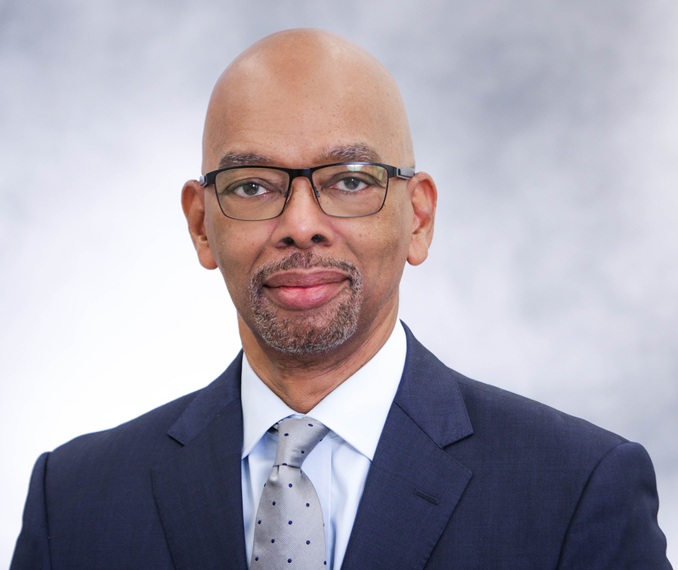
Herman A. Taylor, Jr., MD, MPH
ENDOWED PROFESSOR AND DIRECTOR
CARDIOVASCULAR RESEARCH INSTITUTE – CVRI
Director, Southeast Hub, NIH AIM-AHEAD Consortium
PI, MSM Hub, Undiagnosed Disease Network
Director, Morehouse-Emory Cardiovascular Center for Health Equity (MECA)

Football Players Health Study at Harvard University
Cardiovascular Research Institute
Location: Research Wing Room 228A
Phone: 404-752-1545
E-mail: htaylor@msm.edu
BIO
Dr. Herman A. Taylor serves as the director and endowed professor of Cardiovascular Research Institute (CVRI). In this role, Dr. Taylor is responsible for providing leadership to advance CVRI into a more viable,robust research-intensive entity, which will maximize its contributions to the educational, research and clinical initiatives of MSM. Under his leadership, CVRI will continue to examine ways to eliminate cardiovascular health disparities in Georgia while serving as a model to the nation.
Dr. Taylor is a nationally-recognized cardiologist leader with broad experience and success in key areas including invasive practice/research. Over the last decade he has focused predominantly on preventive cardiology and leadership of the landmark Jackson Heart Study (JHS) and ancillary observational research projects. Dr. Taylor was appointed in 1999 as the Principal Investigator and Director of the Jackson Heart Study, the largest epidemiological study of African Americans and cardiovascular disease of its kind ever undertaken.Since assuming that role he has held three simultaneous positions with the institutions funded by the NIH to administer the Study: Professor of Medicine and an attending cardiologist (and the inaugural holder of the Aaron Shirley Endowed Chair for the Study of Health Disparities) at University of Mississippi Medical Center; Visiting Professor of Biology in the Division of Natural Sciences at Tougaloo College; and, Clinical Professor of Epidemiology and Preventive Medicine at Jackson State University.
Dr. Taylor earned his bachelor's degree from Princeton University, Princeton, NJ, an M.D. degree from Harvard Medical School, and a Master of Public Health degree from Harvard School of Public Health.
CURRENT RESEARCH
To develop innovative, cross-disciplinary research programs that integrate basic, translational, clinical and population science approaches to address racial/ethnic disparities in cardiovascular health.
Artificial Intelligence/Machine Learning Consortium to Advance Health Equity and Researcher Diversity (AIM-AHEAD)
MSM will operate as one of six regional leadership hubs to mobilize consortium-building and programs to expedite the building of AI/ML capacity at minority-serving institutions (MSIs) and accelerate the training and development of underrepresented minorities (URMs) in AI/ML and data science. To ensure that health disparities and inequities are not further amplified, the goal of MSM is to ensure the active participation in innovations in AI/ML among diverse scientists and communities of color who have the potential to contribute expertise, data, diverse recruitment strategies, and cutting-edge science, and to inform the field on the most urgent research questions but may lack financial, infrastructural, and data science training capacity to apply AI/ML approaches to research questions of interest to them.
For more information https://web.archive.org/web/20250526150029/https://www.aim-ahead.net/
Toppling the Monolith: Embracing Heterogeneity and Resilience In Understanding and Solving Health Disparities. Morehouse-Emory Cardiovascular Center for Health Equity (MECA)
Funded by the American Heart Association, this grant seeks to understand resilience among African American populations by identifying geographic pockets where blacks are healthier than expected, versus areas where health outcomes are poor. This study combines three component projects: i. Population Sciences Project: to identify “at-risk” and “resilient” communities in the Atlanta Area, including interviews and measuring AHA LS7 levels. ii. Clinical Sciences Project: to understand the impact of risk and resilience on generic pathophysiologic pathways, and to offer lifestyle interventions for individuals from each community. iii. Basic Sciences Project: techniques such as epigenetics and metabolomics to look at the underpinnings of health, and to track participant response to lifestyle interventions offered during clinical care.
STAFF
Dr. James Washington
PROJECT DIRECTOR AIM-AHEAD/STAFF SCIENTIST
Morehouse School of Medicine Cardiovascular Research Institute (CVRI) 720 Westview Drive | RW209 Atlanta, GA 30310-1495 (404)756-5050 (Office) | (470) 848-7443 (Cell)
Kim Lute, MFA
klute@msm.edu
REGIONAL COMMUNICATIONS MANAGER AIM AHEAD/ CARDIOVASCULAR RESEARCH INSTITUTE - CVRI
Cardiovascular Research Institute - CVRI 404.756.8920 (o) Morehouse School of Medicine 720 Westview Dr. SW Atlanta, GA 30310
Chad Evans
MACHINE LEARNING ENGINEER
Cardiovascular Research Institute - CVRI crevans@msm.edu Morehouse School of Medicine 720 Westview Dr. SW Atlanta, GA 30310
Chinonye Wamkpah, MPH (Chiny)
PROGRAM MANAGER
Center of Excellence for Digital Health (COEDH), Department of Family Medicine AIM-AHEAD Program, Cardiovascular Research Institute (CVRI) cwamkpah@msm.edu 404.756.8845 Morehouse School of Medicine720 Westview Dr. SW Atlanta, GA 30310
Aundi D. Sims, MHRM
ADMINISTRATIVE ASSISTANT
Cardiovascular Research Institute – CVRI & AIM-AHEAD adsims@msm.edu 404-756-5056 (o) Morehouse School of Medicine720 Westview Dr. SW Atlanta, GA 30310
Wendi Wright, DHSc
DIRECTOR OF CLINICAL RESEARCH PROGRAM OPERATIONS
Cardiovascular Research Institute wewright@msm.edu 470.681.4239 (o) 770.802.0199 (c) Morehouse School of Medicine720 Westview Dr. SW Atlanta, GA 30310
FACULTY
Our faculty is a diverse team of experts whose collaborations within and beyond MSM amplify our capacities. Furthermore, our research priorities and methodologies are significantly informed by community engagement, grounding our scientific pursuits in real-world experiences and needs.
Kameswara Badri, Ph.D.
ASSISTANT PROFESSOR
Cardiovascular Research Institute - CVRI
Pharmacology & Toxicology
Cardiovascular Research Institute
Location: Research Wing 206
Phone: (404) 756-5025
E-mail: kbadri@msm.edu
Sharon Francis, Ph.D.
ASSISTANT PROFESSOR
Cardiovascular Research Institute - CVRI
Physiology
Cardiovascular Research Institute
Location: Research Wing D201
Phone: 404-752-8672
E-mail: sfrancis@msm.edu
Rakale C. Quarells, Ph.D.
ASSOCIATE PROFESSOR
Community Health & Preventive Medicine
Cardiovascular Research Institute
Location: National Center for Primary Care 318B
Phone: 404-752-1956
E-mail: rquarells@msm.edu
Dong Liu, M.D., Ph.D.
ASSOCIATE PROFESSOR
Physiology
Cardiovascular Research Institute
Location: Research Wing D212
Phone: 404-756-8916
E-mail: dliu@msm.edu
Melvin R. Echols, MD, MSCR, FACC, FASPC, FHFSA
CHIEF HEALTH EQUITY ADVANCEMENT & INCLUSION OFFICER
American College of Cardiology Associate Professor of Medicine, Associate Director (Clinical Research), Cardiovascular Research Institute (CVRI) Morehouse School of Medicine Email: mechols@acc.org, mechols@msm.edu Phone: (919) 452-5788
Mateus H. Gouveia. Ph.D., M.Sc.
ASSISTANT PROFESSOR OF GENETICS
Department of Public Health Education
Morehouse School of Medicine
720 Westview Drive
Atlanta, GA 30310
Medical Education Building (MEB), Room C-302
Luis Villacorta, Ph.D. FAHA
ASSOCIATE DIRECTOR FOR BIOMEDICAL RESEARCH Cardiovascular Research Institute Associate Professor, Department of Physiology Morehouse School of Medicine 720 Westview Dr. SW Atlanta, GA 30310 Office: 404-752-1679 Cell: 734-330-8728STUDENTS
We’re committed to mentoring and developing diverse investigators as leaders in cross-disciplinary, collaborative research.
Steven Moreton
Doctoral Student
Jasmine Burrell
Postdoctoral Researcher
Nori Henley
Doctoral Student
Audrey Quenneh
Doctoral Student
Uswa Jadoon
Doctoral Student